The Corner Store
Fouad's hands were flat on the counter.
The bell above the door rang once. Fouad was pricing cans in the back when the man came in. He called out without looking — be right with you — the way he’d called it ten thousand times in twenty years on Gottingen. By the time he got to the counter the man was already at the imported shelf.
Small. That was the first thing. Grey at the temples, a suit jacket that cost more than Fouad’s display cooler, worn open, unbothered. Pale eyes doing a slow inventory of the shelves. Not shopping. Something else.
Fouad settled behind the counter and waited.
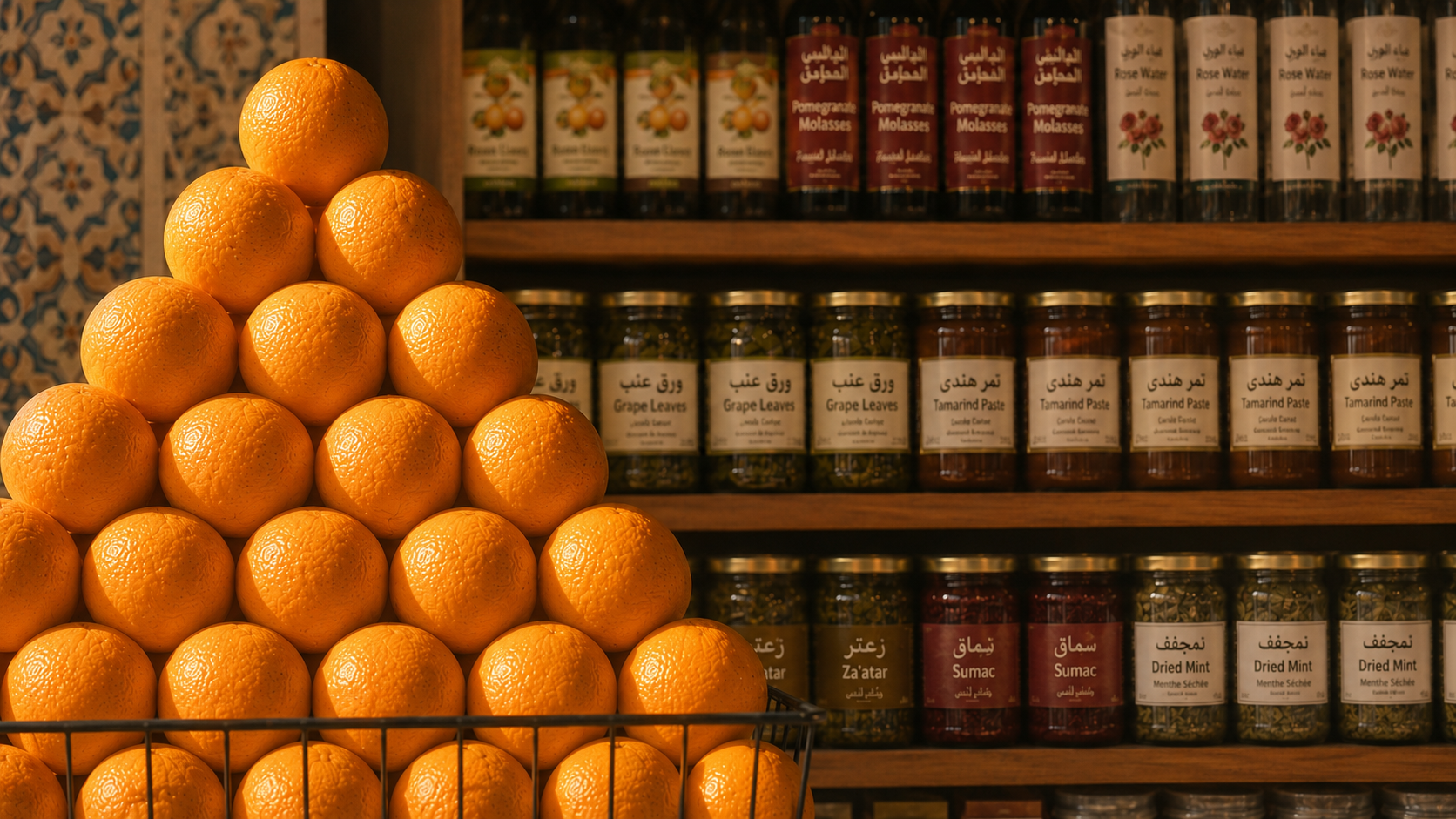
The man picked up a jar of pomegranate molasses. Turned it label-forward. Set it down. Picked up the next one. He worked his way along the shelf without hurry, without explanation, straightening each jar so the labels faced out, even, equidistant. As if this were simply what needed doing and he was the one to do it.
“Those are fine where they are,” Fouad said.
“Of course they are.” He didn’t look up. His English was precise, the faintest colouring underneath it. French first, something Slavic behind that, and then something else Fouad couldn’t place, a lilt that softened the consonants. “I keep my hands busy. Old habit.”
He finished the shelf and moved to the fruit display by the window, the wire rack where Fouad kept the Moroccan oranges, whatever the distributor sent off the container ships. The man picked up an orange. Examined it. Set it at the top of the stack. Picked up another. He was building something, patient and unhurried, turning a casual pile into a structure.
Fouad’s hands were flat on the counter.
A truck passed on Gottingen. The cooler hummed. The man stacked fruit in a silence Fouad knew from other rooms, other conversations. The silence of a man who had chosen to be exactly here.
When the pyramid was finished the man stepped back and looked at it. Then he turned around.
Up close he was even smaller than he’d seemed. Fouad had half a foot on him and fifty pounds. None of it counted. The pale eyes were doing the same inventory they’d done on the shelves.
“Très bien,” he said quietly, to no one in particular. “You have a good store, Mr. Toulaney. Clean. Reliable. My father would have said a man’s store tells you everything about him.” A brief pause. “On voit les choses importantes.”
He buttoned his jacket. One button, centre, unhurried.
“You’ll be seeing me again.”
Not a threat. Not a promise. An administrative fact.
The bell rang once on his way out.
Fouad stood at the counter and did not move for a long time. He was aware of his own breathing, the steadiness he was maintaining in it. On the shelf, the jars stood in a perfect line, labels out, equidistant. On the rack by the window, the oranges rose in a clean pyramid, the kind that required intention.
He had never arranged them that way.
He did not touch them. Not that night. Not the next morning either, when his nephew came in for the early shift and asked who’d been at the display.
Fouad poured coffee. “Nobody,” he said.
He had not asked the man’s name. He understood now that this had been correct.